In this article
The short version
Back baby molars usually stay until ten to twelve years old.
An abscess can damage the adult tooth forming underneath.
Some early decay can be stopped without drilling at all.
It is one of the most reasonable questions a parent can ask, and it deserves a straight answer rather than a lecture. The teeth are going to fall out anyway. Why put a small child through a filling for a tooth with a limited shelf life?
Sometimes you are right and we will say so. Often you are not, and the reason has very little to do with the baby tooth itself.
Baby teeth stay longer than most parents expect
The front ones go early, around six or seven. But the back baby molars, which are the ones that decay most often, usually stay until somewhere between ten and twelve years old.
So when we find a hole in a back molar in a five-year-old, we are not talking about a tooth with a year left. We are talking about a tooth that has to last another five to seven years, chewing three meals a day, with a hole in it that will only ever get bigger.
That single fact changes the answer more than anything else, and it is the one most people have never been told.
What actually goes wrong if it is left
It hurts, and children hide it
Children very often do not report toothache the way adults do. It shows up as chewing on one side, refusing cold things, waking at night, or being unusually miserable. Parents frequently only connect it afterwards, once the pain is gone and the child is suddenly cheerful again.
The infection reaches the adult tooth
This is the part that matters most, and it is the reason we do not simply wait. The developing adult tooth is sitting directly underneath its baby predecessor. An abscess at the root of a baby molar sits right on top of the tooth that is forming.
That can leave the adult tooth with a permanent white or brown mark, or with soft, poorly formed enamel, a defect it will carry for life. It can also push the adult tooth off course as it comes through. A filling in a baby tooth is often really about protecting the adult tooth behind it.
Space disappears
Baby molars hold the space for adult teeth. Lose one early and the teeth either side drift into the gap, so there is nowhere for the adult tooth to arrive. That is a crowding problem later, and orthodontic treatment costs a great deal more than a filling.
Emergencies happen at the worst time
Untreated decay does not usually become urgent politely, during business hours. It becomes urgent on a Saturday, on holidays, the night before something that matters.
When we would genuinely leave it alone
We would rather lose the appointment than sell you treatment that is not needed, so here is the other side.
- The tooth is nearly out anyway. If a molar is due to fall out within months and the decay is not causing pain or infection, filling it makes no sense. We watch it.
- The decay is early and has stopped. Not every mark on a tooth is an active hole. Early decay can be arrested with fluoride, better cleaning between the teeth, and a change to how often sugar arrives, with no drilling at all.
- The child cannot cope today and it is not urgent. Forcing a frightened four-year-old through a procedure they are not ready for teaches them that dentists are something to fear, and we will be dealing with that for the next thirty years. Sometimes the right clinical decision is to build up to it.
Honesty cuts both ways. If a tooth can be watched rather than drilled, we will tell you.
What treatment actually involves
Usually far less than parents are bracing for. A small filling in a baby molar is often a short appointment. For children who need more, or who find the whole thing overwhelming, there are options: numbing gel before anything else happens, a stop signal the child controls, breaking treatment across visits, or, for genuinely complex cases, completing everything in one go under general anaesthetic so the child remembers none of it.
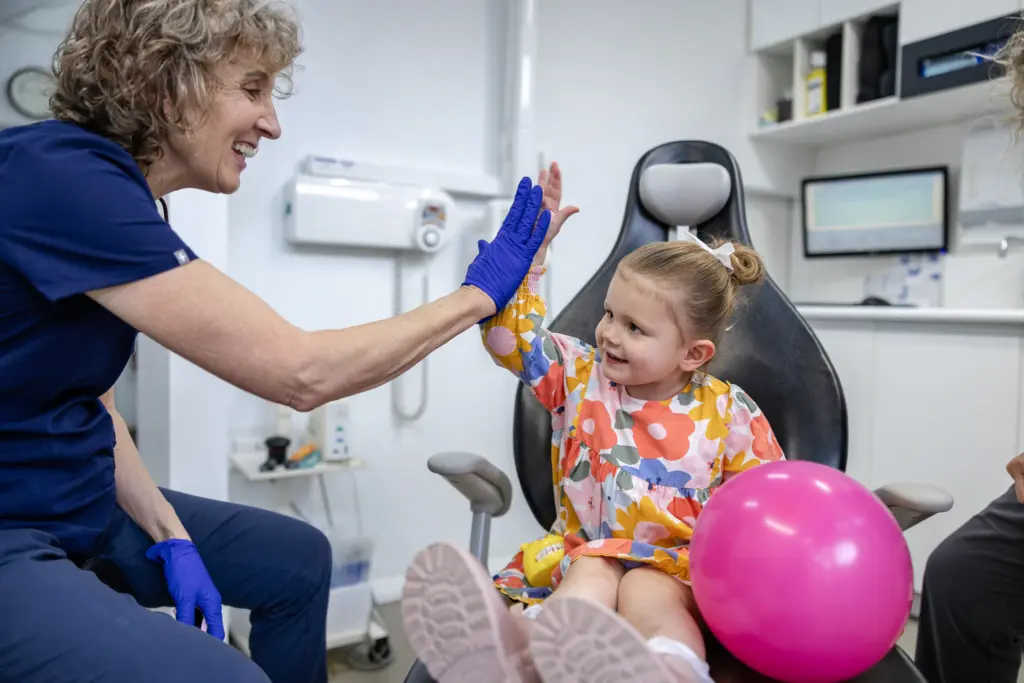
Which of those is right depends entirely on the child, and that is a conversation rather than a policy. Personalised support means the plan fits the child in front of us, not the average child.
Children who need a different approach
For an autistic child, or a child with ADHD or sensory differences, the standard version of a dental visit can be the actual barrier: the lights, the noise, the unfamiliar textures, the expectation of lying still while a stranger works in your mouth.
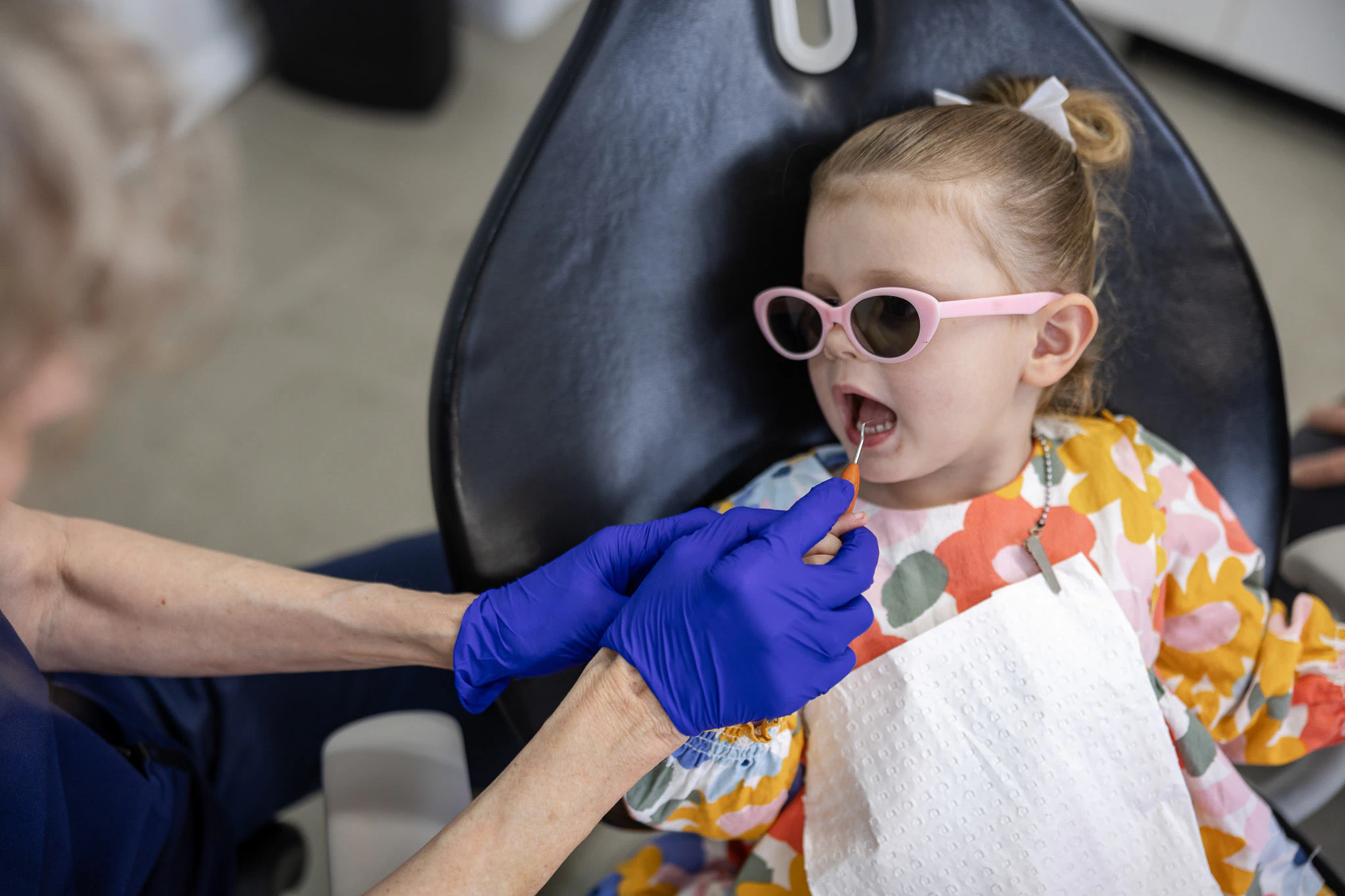
Inclusive care means changing the appointment rather than expecting the child to change. Quieter times of day, seeing the room before anything happens, sunglasses against the light, headphones, letting a child sit up between steps, or simply a first visit where nothing is done at all. Every one of those is a legitimate clinical adjustment, and none of it is a special favour.
Prevention, briefly
The single biggest driver of decay in children is not how much sugar, but how often. A drink sipped over an hour does more damage than the same drink finished in five minutes, because the mouth never gets a chance to recover.
- Water and plain milk between meals. Juice and cordial with meals, if at all.
- Brush twice a day with a fluoride toothpaste appropriate for their age, and spit rather than rinse.
- Help them brush until they are about eight. Handwriting is the rough test: if their writing is still developing, so is their brushing.
- Start cleaning between the back teeth once those teeth are touching. That is where the holes we find usually are.
Many Australian families are also eligible for a contribution towards their children’s dental care through the Child Dental Benefits Schedule. It is worth checking with Services Australia whether your child qualifies before you assume cost is a barrier. Helping patients access the care they deserve starts with knowing what you are entitled to.
What we would say if you asked us in the chair
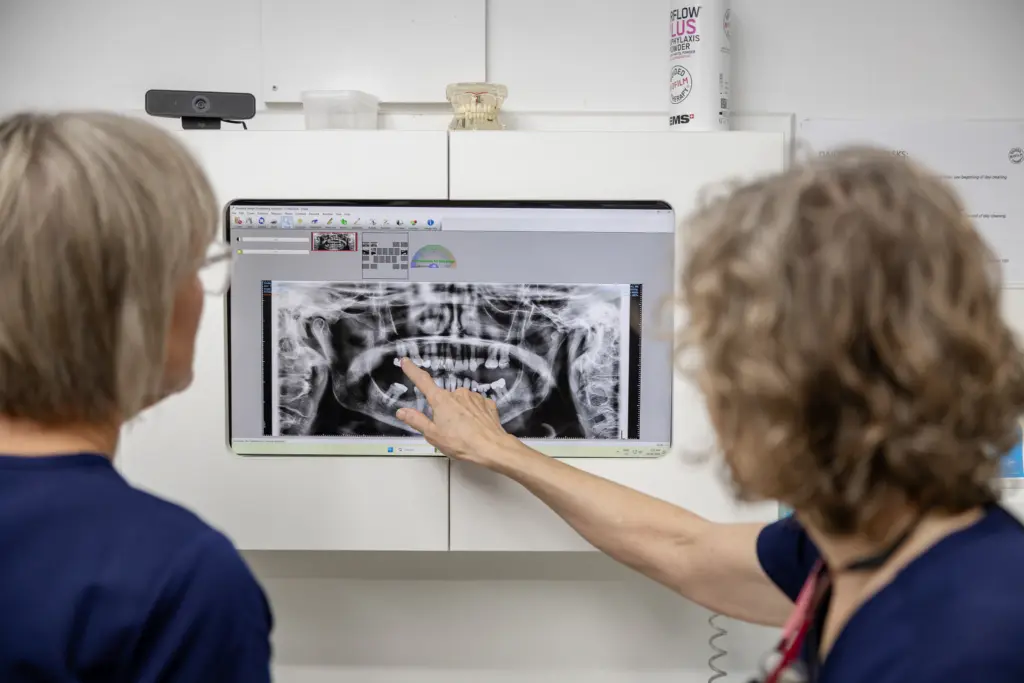
Bring them in and let us look. If the tooth can wait, we will tell you it can wait. If it cannot, we will explain exactly what we can see and why, before anything is decided, and you will not be judged for having missed it, because holes in baby teeth are extremely common and almost never a sign that anyone did anything wrong.
You can read more about how we work with children on our children’s dentistry page, or about neurodiversity-affirming care if that is what your family needs. When you are ready, get in touch and we will find a time that suits.
Not sure your technique is working?
We will show you on your own teeth where you are missing.