Our Services
Anxious Patients and Treatment Under General Anaesthetic
Comfortable Dental Care Under General Anaesthetic
Whenever possible, dental treatment is administered to children without the use of general anaesthesia. In certain instances, however, it is preferable, or necessary, to perform treatments using general anaesthetic in a hospital setting.
For children and adults who find it difficult to cope with treatment in the dental chair, we regularly perform dental procedures in a hospital setting. This offers the ability to complete a full course of dental care at a higher quality level that would not be possible if the patient was awake.
Also, the child will have no memory of this treatment so will continue to find the dental chair non-threatening and continue to be a confident and happy dental patient throughout life.
A challenging experience in the dental chair can turn a child off going to the dentist for the rest of their lives. No one wants this.
What Does Treatment Under General Anaesthetic Include?
Put simply, general anaesthetic puts the child to sleep so that Dr Mary-anne Slater can safely perform the necessary procedure to the best of their ability and with the minimal stress and discomfort to the child.
The reasons it might be required falls into two categories:
Firstly, for children under 10 years of age, or dental anxious adults, that have multiple teeth with problems, often a general anaesthetic is recommended, so that a full course of dental treatment at a higher quality level than would be possible with multiple dental visits with the patient awake in the chair.
Secondly, anaesthesia may be required when a child is too young to follow directions, when a child or adult has special needs, or when they suffer anxiety or behavioural challenges. In these situations, regular treatment in the dentist’s chair would not be possible and could pose a threat to their safety, as well as that of the treating dental professional.
What to Expect at the Practice
Before, during and after – here is exactly how your visit runs, so nothing on the day comes as a surprise.
Before
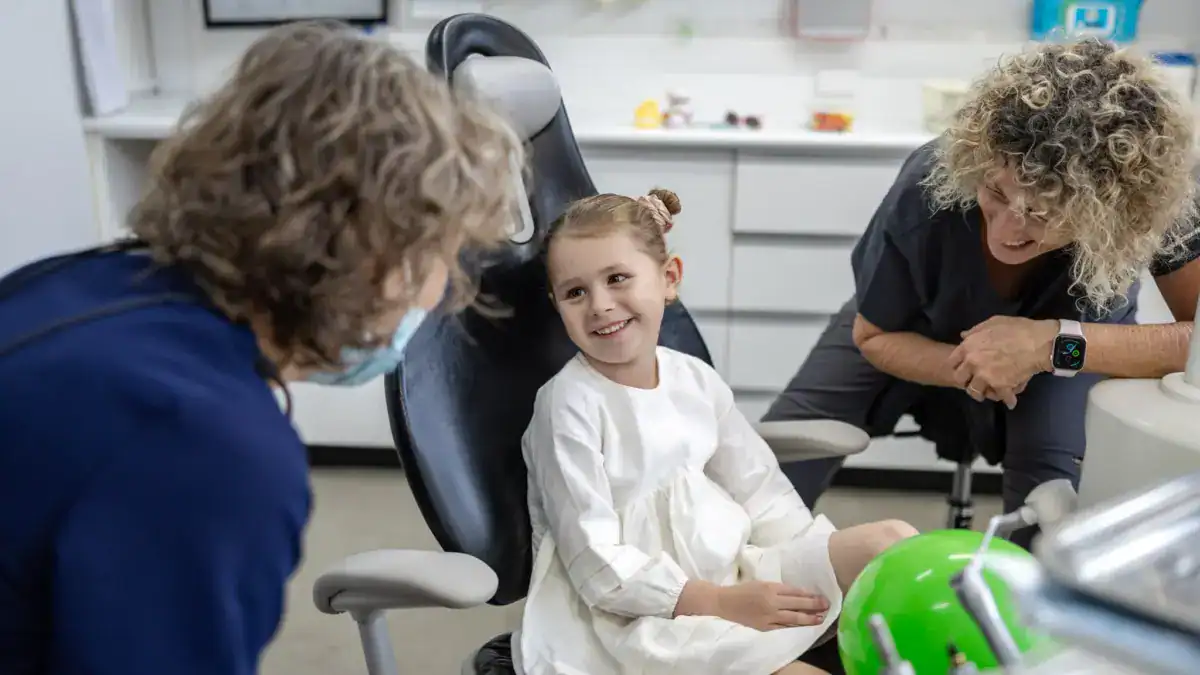
All general anaesthetic consults take 1 hour, where the child has a wonderful experience of putting the chair up and down, picking glasses, playing guessing games and having NO treatment other than using the dental chair triplex to blow up a balloon of their colour choice.
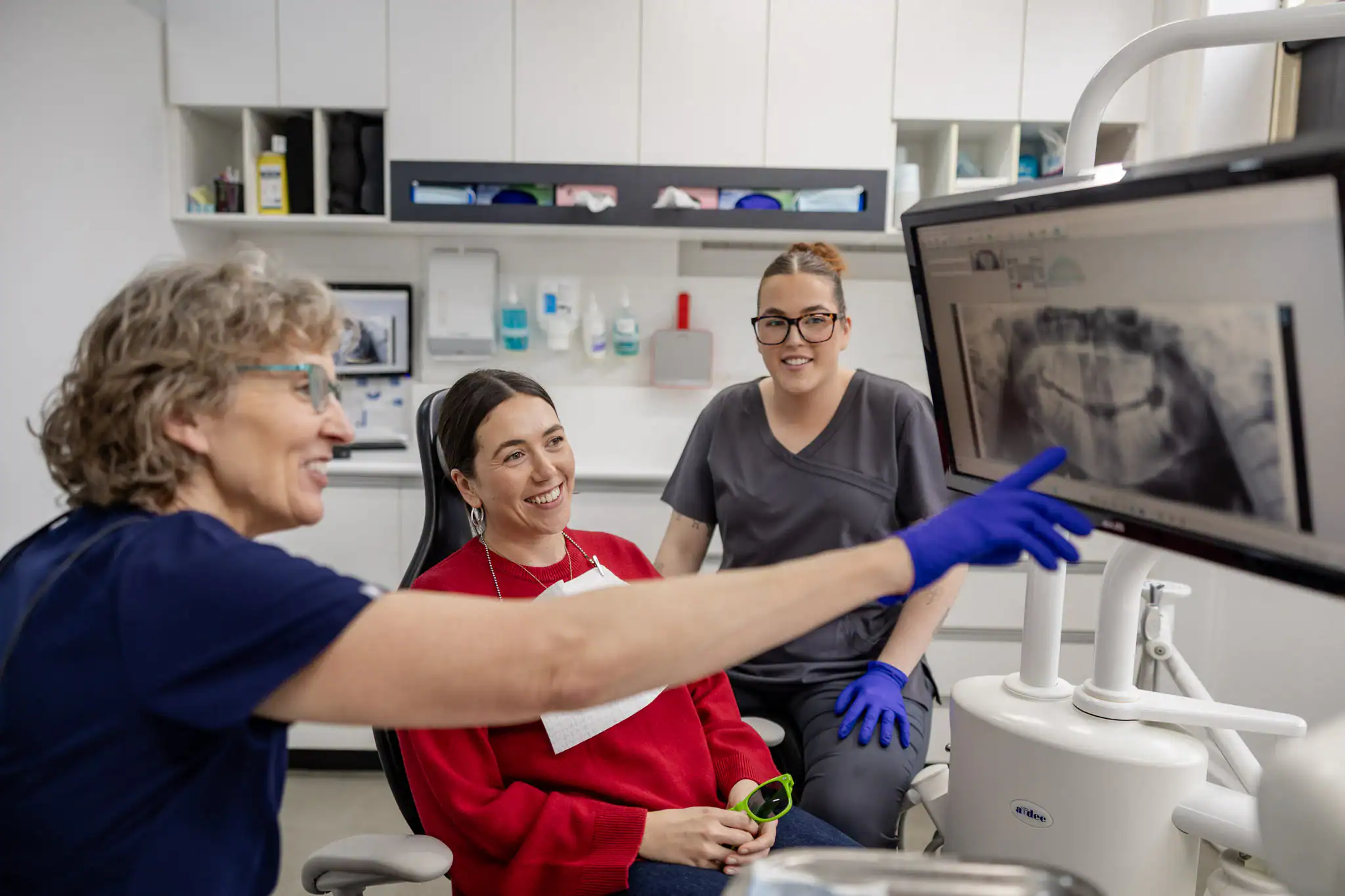
Teeth and gums are examined, often radiographs are taken and of course an extra prize is given if radiographs are taken. The child is weighed in case a script is needed for antibiotics, and their teeth are painted for everyone to check how their toothbrushing is going and any teeth or areas they are missing. Then it is off to the prize room for the child, to select a prize, a sticker, a colour-in, and/or toys to play with from the toy box.
Meanwhile Dr Mary-anne Slater will discuss with the parent why there is decay or other tooth problems, and what to do at home to reduce these problems. Often it is simple: changing toothpaste to a stronger fluoride toothpaste, or a less minty tasting toothpaste so the child is happy to clean their teeth, not rinsing toothpaste off, reducing sugar snacks and drinks during the week. Finally, we will discuss what teeth need to be treated under general anaesthetic and why.
This is a very open, genuine, caring conversation, with no judgment, as there is usually multiple causes why teeth decay. There is always the opportunity during and at the end of the appointment to ask any questions.
A summary of this discussion is emailed to the parents along with the quote for general anaesthetics, as often in a consultation there is a lot to take in. We do not want you to think you have missed out on any important or helpful information or advice.
During
Treatment is performed at Calvary Riverina Surgicentre, 329 Edward Street, Wagga Wagga, phone 02 6925 4700.
You will phone them the day before to find out what time to arrive and when your child is to fast from, that is, not eat. When you arrive you will be taken to meet a nurse and the anaesthetist to discuss what will happen. You will also see Dr Mary-anne Slater to confirm the treatment planned, with the opportunity to ask any questions.
Anaesthetists are among the most skilled and extensively trained medical professionals and perform their duties under highly controlled conditions in a hospital setting. When administering anaesthesia to a child undergoing a dental procedure, the anaesthetist will work closely with Dr Mary-anne Slater who is performing the treatment.
Usually, the general anaesthetic will begin with gases delivered via a pink mask. Dr Mary-Anne Slater will then perform the surgery or treatment.
Following the procedure, the child will be taken to a recovery room, where the parent or carer will join them, along with a nurse who will monitor their recovery. Children are often a little upset and disoriented upon waking, but when this passes, they will be discharged from the hospital, usually two to three hours later. When asked at the next appointment what the child remembers, they say the prize they opened at the end of their treatment.
After
Dr Mary-anne Slater will phone two times over the next few weeks to review your child’s recovery. An operation report will be emailed to you and the referring dentist regarding treatment performed, and any recommendations regarding toothpaste, space maintenance and follow-up reviews, either with the referring dentist, Dr Mary-Anne Slater or a specialist orthodontist.
What Makes Our Practice Different
The same standard of care sits behind every service we offer – 43 years of it, in one familiar practice on The Esplanade.

Qualifications & Training
Weekly mentoring with an oral surgeon, bimonthly mentoring with a cosmetic dentist, additional training in anxiety informed care and neurodiversity- affirming practice, annual CPR training for all the team.

Technology & Techniques
AIRFLOW gentle scale and clean, WAND la machine, digital imaging, intraoral cameras, stainless steel crowns, and sedation options including treatment under general anaesthetics for anxious patients.

Associations & Accreditation
Member of Australian Dental Association, NSW and Federal, APRHA member, D3 group, Palliative Care Volunteer.
Accredited and affiliated with




43
Years Serving Wagga Wagga Families
100+
Combined Years Dental Experience
5
Trained and Dedicated Team Members
1
Local Practice, Every Need Covered
Frequently Asked Questions
The questions Wagga families ask us most about this service.
What is a general anaesthetic?
A general anaesthetic is medication given by a specialist anaesthetist that allows your child to sleep throughout the procedure. They will not feel pain or remember the treatment. Hence a full course of treatment can be completed to the highest quality. Dr Mary-anne Slater attends the day surgery three times a month. This means children and adults can access treatment if having this treatment in the dental chair is not possible. Dr Mary-anne Slater has over forty years’ experience with general anaesthetic dentistry.
Is a general anaesthetic safe for my child?
Modern general anaesthesia is very safe. Your child will be cared for by a qualified specialist anaesthetist and an anaesthetic nurse, who will monitor them closely throughout the procedure.
What treatment will be carried out?
The treatment plan may include fillings, stainless steel crowns, extractions, nerve treatments, or preventive treatments such as fluoride application. The exact treatment will be discussed with you and quoted before the procedure.
Can all of the dental work be completed in one visit?
Yes, in all cases, treatment is completed in a single session while your child is asleep, reducing the need for multiple appointments. The average time the treatment takes under general anaesthetic is one hour.
How should I prepare my child for the procedure?
We recommend speaking briefly and positively and simply about the experience and avoiding words that may create anxiety.
Such as ‘Mary-anne is going to fix your teeth while you are asleep, and also when you wake up there will be prize to open. I will be with you until you fall asleep, and when you wake up. ”
You will also receive specific fasting instructions from the hospital or day surgery, which must be followed carefully.
Why is fasting important?
Having an empty stomach before a general anaesthetic is essential for your child’s safety. Failure to follow fasting instructions may result in the procedure being postponed till later in the day or to another day.

Ready when you are
Whether it has been six months or sixteen years, the first appointment is a conversation. Call us, or send a message and we will come back to you.
Visit Us
4/24 The Esplanade
Wagga Wagga NSW 2650
Hours
Mon – Thurs: 8:00am – 5:00pm
Fri – Sun: Closed
Call
02 6921 6035