
Frequently Asked
The questions we hear most
Ninety honest answers, from first visits to what things actually cost
These are the questions patients really ask us — at the front desk, in the chair, and on the phone at nine o’clock at night. We have written the answers down exactly as we would give them in person. Choose a topic below, or read straight through.
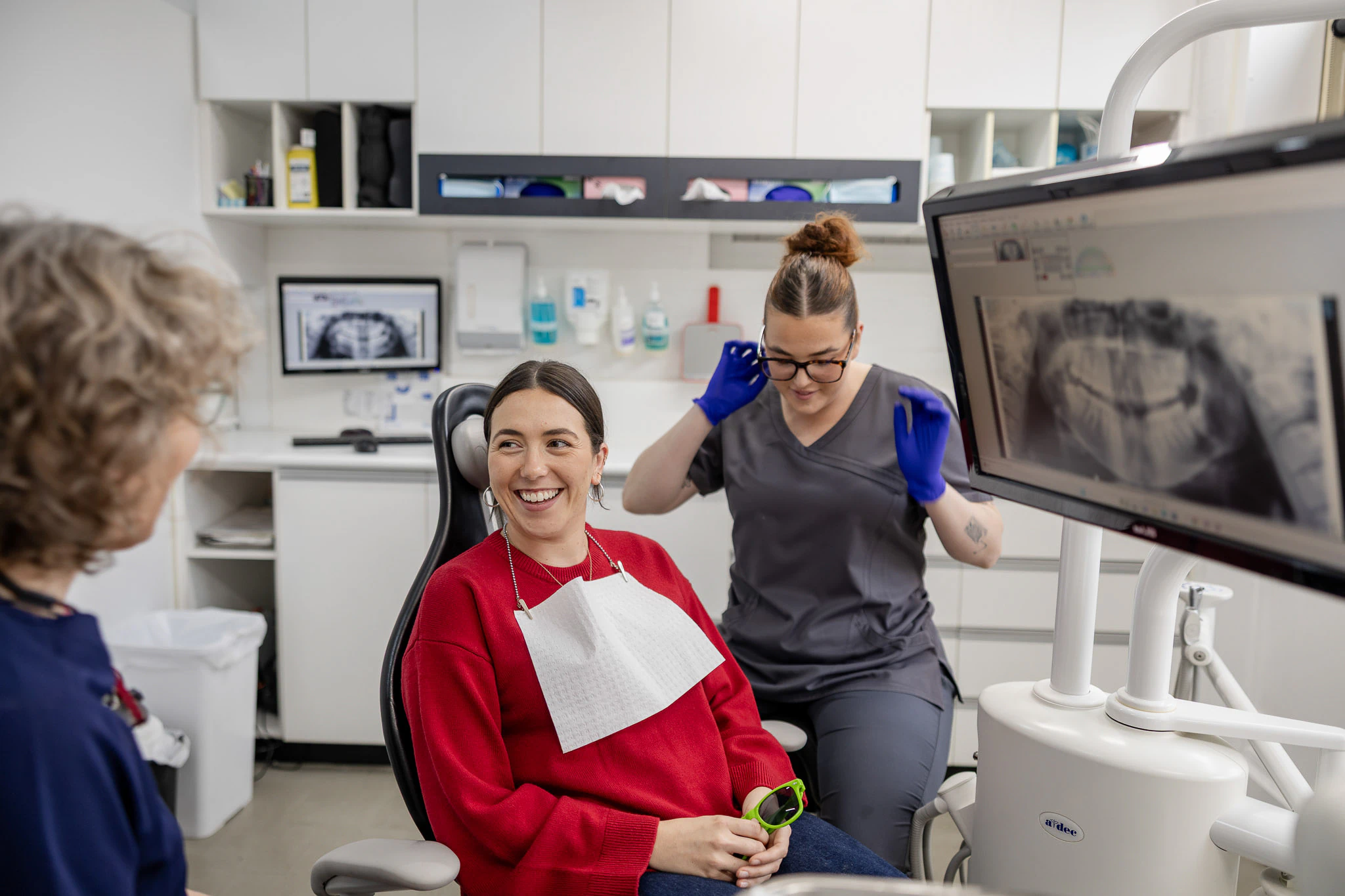
Child Dentist
How does a dentist with a focus in children differ to a regular dentist?
A focus in paediatric dentistry brings something really important: curiosity and compassion tailored specifically to children. Regular dentists see all ages, but a paediatric focused dentist like Dr Mary-Anne Slater has deeper training in child development, behaviour guidance, and how anxiety shows up differently in young minds. We understand that a five-year-old and a fifteen-year-old have completely different needs—and that neurodivergent kids need individualised support.
Beyond the clinical skills, we’ve invested in creating an environment and approach that makes oral health care less stressful and more accessible. We take time to build trust, offer choices where we can, explain things clearly, and adapt our pace and communication to each child. Our paediatric expertise means we’re not just treating teeth—we’re helping your family build a positive relationship with dental care that lasts a lifetime.
My child has additional needs; which additional needs does the practice welcome?
We welcome children with additional needs and are committed to neurodiversity affirming practices. This includes children with autism, ADHD, sensory processing differences, anxiety, and other additional needs. We’ve designed our approach specifically to support kids who experience the dental environment differently.
This might mean offering quieter appointment times, extra breaks, clear communication about what’s happening, choices where possible, or extra time to build trust. We’re curious about what works for your child and we personalise our support accordingly. Everyone deserves compassionate, inclusive care—and we’re here to make sure your child gets exactly that. When you book, just let us know about your child’s needs and we’ll prepare accordingly.
Do I need a referral to come to your clinic?
No referral is needed to see us—you can book directly. If your child has been seen by another dentist or has existing notes or xrays, these are required to be better informed for your child’s visit, before you arrive. .
We make it easy to access the care your family deserves. Just give us a call or book online, and we’ll get your child on the schedule. If there’s anything unusual in their history or specific concerns, we’ll chat through it when you contact us so we’re fully prepared.
Will the appointment be running on time – and how long will it take?
We run on time because we respect your day—we know busy parents are juggling a lot, and a late appointment throws everything off schedule. We aim to start when we say we will, and we’ve built realistic timeframes into our booking so you’re not left guessing.
Appointment length varies depending on what your child needs. A simple check-up might be 30 minutes, while a treatment visit or a child with dental anxiety might need 45 minutes to an hour. We’d rather give everyone the unhurried time they deserve than rush through. When you book, we’ll let you know how long to plan for, When you arrive if in exceptional circumstances, we are not running to time, we will let you know. You are not just left sitting in the waiting room, with no idea when you will be seen.
Do we do the Medicare dental scheme?
Yes, we participate in the Medicare dental scheme, which means eligible children can access support for essential dental care through the program. This is part of our commitment to helping families access the care they deserve, regardless of financial barriers.
When you book, let us know if your child is eligible, and we’ll handle the scheme requirements on our end. We’re transparent about costs and what’s covered, so there are no surprises when you arrive.
Will baby teeth really matter if they are going to fall out anyway?
Yes. Healthy baby teeth are important for eating, speaking, guiding adult teeth into position, and maintaining your child’s comfort and wellbeing. In particular the upper second baby molar is essential for tooth spacing. If this needs to be extracted, then space maintenance will be recommended.
My child has knocked their tooth OUT - what should I do?
This is urgent but keep in mind that outcomes depend on how quickly you act and how the tooth is handled. Find the tooth immediately and handle it only by the crown (the white part), never the root. Rinse it gently with milk (or saline if you have it)—avoid tap water as it can damage the root cells. If your child can tolerate it, try to place the tooth back in the socket straight away; if not, pop it in a cup of milk to keep it alive.
Ring us right away—ideally within 30 minutes. If it’s out of hours, contact our emergency dentist wagga service. Time is critical with knocked-out teeth, and specialist paediatric dentists like ours understand how to handle these situations calmly, especially for anxious or neurodivergent children. We’ll give you clear guidance over the phone and get your child in as quickly as possible.
My child has sore teeth and facial swelling - what should I do?
Swelling combined with tooth pain suggests infection, which needs prompt attention. Rinse the area with warm salt water, offer pain relief, and apply a cold compress to the outside of the cheek. Try to keep your child calm and comfortable while you get help.
This isn’t something to wait on—please contact us or our emergency dentist wagga service right away. A dental professional who understands your child’s unique needs can quickly identify what’s happening and get them the care they deserve. If it’s a severe infection or your child is struggling to swallow or breathe, head to your nearest hospital emergency department first, then contact us.
Can my child go swimming after having a tooth extracted?
We recommend keeping your child out of the pool for at least a week after tooth removal. Swimming can introduce bacteria into the extraction site, and the salt or chlorine can irritate the healing area. Plus, if your child is still experiencing some discomfort or swelling, a vigorous swim might not feel great anyway.
The extraction site needs time to form a protective clot and begin healing properly—think of it like a small wound that needs care. Stick to calm activities like reading, light play, or screen time for the first few days, and you can gradually ease back into normal routines. If your child has questions or worries about getting back to their usual activities, we’re happy to chat through a realistic timeline with them too.
Where is Dr Mary-anne Slater's dental surgery located, and where's the best place to park?
Dr Mary-Anne Slater’s dental surgery is located in Wagga Wagga, NSW, and we’ve made parking straightforward so busy parents can get in and out without extra stress. There’s ample parking, in the street right outside the courtyard where our clinic is located, and we’re easy to find in the local area. When you book, we’ll send you clear directions and parking details so you know exactly where to head.
Being locally accessible is part of how we support our Wagga community. We’re here as your neighbourhood dental professional, not a faceless clinic—which means you can actually talk to us, we know your family’s story, and we can offer personalised support for your child’s unique needs.
Are you open at weekends?
No, we’re not currently open on weekends during regular clinic hours. However, for existing patients we do offer an emergency dentist wagga service for urgent dental problems that happen outside business hours—because we know emergencies don’t stick to the 9-to-5.
For routine appointments and planned care, we work during standard business hours. If you’re struggling to find a time that works with your busy schedule, please chat with us—we’re often more flexible than you’d think, and we’re keen to find a solution that actually fits your family’s life.
Do you accept all health funds – and can we claim with you?
We work with most major health funds, and yes, you can claim with us. We’ll do the paperwork so you get your rebate processed smoothly—that’s one less admin task for busy parents to juggle.
Our goal is fairness and transparency around costs, so you know exactly what to expect.
What is your availability like – is it hard to get an appointment?
We work hard to offer availability that actually works for families. While busy periods do happen (especially school holidays), we generally have good flexibility in our schedule and aim to get new patients in promptly rather than months down the track.
If you’re after a specific time slot, the best approach is to call us directly—we can often find something that suits your family better than what you’ll see online. We know that finding a kids dentist wagga who has availability AND understands your child’s needs is challenging, so we do our best to make the fit work.
Why does my child need dental treatment under a general anaesthetic?
A general anaesthetic may be recommended when a child has multiple areas of tooth decay, is very young, is unable to cope with treatment in the dental chair or requires extensive dental work to be completed safely and comfortably.
Will the decay come back?
The dental treatment repairs existing problems, but new decay can develop if oral hygiene and dietary habits do not change. Dr Mary anne Slater will advise on non-minty toothpaste with appropriate fluoride levels, and specific dietary changes that will reduce further tooth decay. This will be discussed at the initial ga consult and emailed to you and the referring dentist. Regular 6 monthly dental check-ups are recommended for any child having a general anaesthetic. The key is brushing with appropriate level fluoride toothpaste EVERY morning and EVERY evening, and then NOT rinsing or drinking water for one hour- your child can spit the toothpaste out though as many times as you like. This rule applies to all the family. Another important key to stop the decay coming back is limiting sugary foods and drinks during the week and saving high sugar snacks and drinks for weekends.
Anxious Patients
What is a general anaesthetic?
A general anaesthetic is medication given by a specialist anaesthetist that allows your child to sleep throughout the procedure. They will not feel pain or remember the treatment. Hence a full course of treatment can be completed to the highest quality. Dr Mary-anne Slater attends the day surgery three times a month. This means children and adults can access treatment if having this treatment in the dental chair is not possible. Dr Mary-anne Slater has over forty years’ experience with general anaesthetic dentistry.
Is a general anaesthetic safe for my child?
Modern general anaesthesia is very safe. Your child will be cared for by a qualified specialist anaesthetist and an anaesthetic nurse, who will monitor them closely throughout the procedure.
What treatment will be carried out?
The treatment plan may include fillings, stainless steel crowns, extractions, nerve treatments, or preventive treatments such as fluoride application. The exact treatment will be discussed with you and quoted before the procedure.
Can all of the dental work be completed in one visit?
Yes, in all cases, treatment is completed in a single session while your child is asleep, reducing the need for multiple appointments. The average time the treatment takes under general anaesthetic is one hour.
How should I prepare my child for the procedure?
We recommend speaking briefly and positively and simply about the experience and avoiding words that may create anxiety.
Such as ‘Mary-anne is going to fix your teeth while you are asleep, and also when you wake up there will be prize to open. I will be with you until you fall asleep, and when you wake up. ”
You will also receive specific fasting instructions from the hospital or day surgery, which must be followed carefully.
Why is fasting important?
Having an empty stomach before a general anaesthetic is essential for your child’s safety. Failure to follow fasting instructions may result in the procedure being postponed till later in the day or to another day.
How long will the procedure take?
The length of treatment varies depending on the amount of dental work required, usually one hour. All children are able to go home on the same day.
Will my child be in pain afterwards?
Some children experience mild discomfort, particularly if teeth have been removed. Pain relief is given while the child is asleep, and we will provide advice on pain relief and post-operative care. Usually, liquid Nurafin is recommended as per the bottle for the first 24 hours.
What can my child eat after treatment?
Soft foods and plenty of fluids are usually recommended for the first day. Written specific instructions will be provided as well as a tooth fairy container with all the extracted teeth.
How can I prevent my child from needing dental treatment under general anaesthetic again?
Prevention is the key. We will work with you to establish healthy eating habits, effective toothbrushing routines, fluoride use, and regular dental visits to help keep your child’s teeth healthy. Not every child who has a GA consult needs to have treatment. However, if your child has pain, infection or swelling, treatment is recommended, to prevent even more serious complications.
Airflow
Does a scale and clean hurt?
Most patients find the treatment comfortable, particularly with thew Airflow machine, and Simones’ gentle approach. Simone always checks if you have sensitive teeth or gums, and takes extra steps to keep you comfortable throughout the duration of the appointment. It feels more like a relaxing visit to a spa than a visit to the dentist. .
How often should I have my teeth professionally cleaned?
For most people, every twelve months is appropriate, although some patients with gum disease or other risk factors may benefit from more frequent visits. Simone will assess your individual needs, and the most beneficial recall for you.
What is Airflow?
Airflow is an advanced cleaning system that uses warm water, air and a fine powder to gently remove stains, plaque and biofilm from the teeth. Our practice was the first practice in Wagga Wagga to purchase an Airflow machine, and Simone and the team regularly update on the latest techniques and maintenance required for this revolutionary machine. It is the gold standard for any gum care.
Can Airflow remove coffee, tea and smoking stains?
Yes. Airflow is highly effective at removing many surface stains caused by tea, coffee, smoking and red wine
Why do I need a professional clean if I brush and use interproximal cleaning aids daily?
Even with excellent home care, plaque can harden into tartar, which cannot be removed by brushing alone. Professional cleaning helps remove these deposits and reduces the risk of gum disease. Simone will measure any gum recession, any deep gum pockets and any bleeding, to check if there is any change, as unfortunately gum disease does not hurt until it is often severe.
When using interproximal cleaning aids effectively, inflammation reduces, and then a larger size if often needed. At every visit, Simone will assess and advise on this.
Sometimes tooths sensitivity can develop, or worsen, especially in the colder winter months, and again we advise on how to treat this at home, often by using more effective sensitive toothpaste.
Do I need to floss?
Flossing is not as recommended as using other aids like Piksters or teepees that are shaped like a brush. Therse are more effective at removing plaque in between teeth, and are considered the gold standard of a daily effective routine for your oral health. Flossing is no longer the ideal. However, for a few patients, used correctly flossing can be effective, if the patient prefers this to other interproximal cleaning aids.
What are the signs I might need a hygiene appointment?
Bleeding gums, bad breath, tartar build-up, tooth staining, gum tenderness, tooth tenderness, or simply feeling overdue for this more specialised clean, are all good reasons to book an appointment.
Can children see the hygienist?
Yes. Hygiene visits can help children develop good oral health habits and keep their teeth and gums healthy as they grow. Children with braces are often referred by their orthodontist for a more specialised clean.
Will my teeth be whiter after a clean?
A professional clean and Airflow treatment can remove many surface stains, making teeth appear brighter. However, it does not change the natural colour of the teeth like professional whitening treatments do.
What is gum disease?
Gum disease is an infection and inflammation of the gums caused by plaque bacteria. Early treatment and regular hygiene visits can help prevent more serious problems developing.
How long does a hygiene appointment take?
Most appointments take between 45 and 60 minutes, depending on your individual needs and the amount of cleaning required.
Family Dentist
What makes a family dentist different?
A family dentist sees patients across every stage of life—from toddlers having their first check-up to grandparents managing more complex dental needs. What sets a great family dental practice apart isn’t just the range of services; it’s the relationships built over years of knowing your family’s history, preferences, and concerns. At Mary-Anne Slater Dental Practice, we take time to understand each person as an individual. That means your six-year-old and your sixty-year-old parent both receive personalised, compassionate care—not a one-size-fits-all approach. Finding a family dentist in Wagga you can trust and stick with long term is genuinely worth the effort.
Do you see patients of all ages?
Yes—we welcome patients of all ages and genuinely love the variety that brings. From young children building their first relationship with dental care, to teenagers, busy adults, and older patients with more complex needs, we’re experienced across the full spectrum. We adapt our communication, our pace, and our approach depending on who we’re seeing. If you have a family member with additional needs, anxiety, or a complicated dental history, please let us know when booking—we’ll make sure we’re prepared to give them the support they deserve.
At what age should my child first visit the dentist?
We recommend bringing your child in for their first dental visit once all the baby teeth have erupted in the mouth, which is after their third birthday. We know that might sound early, but early visits are less about treatment and more about familiarisation. Getting your child comfortable with the dental environment from a young age sets them up for a lifetime of positive experiences. It also gives us the chance to assess their development, answer your questions, and give you tailored guidance on diet, brushing, and fluoride. The first visit is usually short, gentle, and—for most kids—genuinely fun, as it finishes with a visit to the prize room to select a prize from a room full of prizes.
How often should my family see the dentist?
For most people, a check-up every twelve months is appropriate. However, some individuals benefit from more frequent visits—particularly those with a history of decay, gum disease, or orthodontic treatment, or children who are at higher risk. We’ll give you a personalised recommendation based on each family member’s specific needs rather than a blanket policy. The goal is to catch small issues before they become bigger (and more costly) ones. Regular check-ups at our Wagga family dental practice are genuinely one of the best investments your family can make in long-term health.
Can I book the whole family in on the same day?
Absolutely—and we’d encourage it. Booking the family together makes logistics much simpler and helps build a shared positive attitude towards dental visits. When children see their parents going through check-ups calmly, it makes the whole experience feel less daunting. Chat with us when you book and we’ll do our best to schedule consecutive appointments that work with your day. We know families are busy, and we’d rather make it easy for you to come in than have scheduling become a barrier to your family’s oral health.
What if someone in my family is anxious about the dentist?
Dental anxiety is incredibly common and nothing to be embarrassed about—we see it every day, and we take it seriously. Our approach is patient, unhurried, and always led by what you’re comfortable with. We’ll explain what we’re doing as we go, check in with you throughout, and never push ahead with anything before you’re ready. For patients with more significant anxiety, we can discuss options like happy gas (nitrous oxide) or treatment under sedation. We’re also experienced in supporting neurodivergent patients who may experience the dental environment differently. Just let us know when you book—preparation makes a real difference.
Do you offer payment plans or health fund rebates?
We work with most major health funds, and you can claim your rebate on the spot using our HICAPS facility. For those without private cover, we participate in the Medicare dental scheme for eligible patients. We’re transparent about costs before treatment begins—you’ll always know what to expect, with no surprises. If cost is a genuine concern for your family, please talk to us. We’d rather have an open conversation than have financial pressure be the reason someone puts off care they need. We’re here to support our Wagga community, and that means being fair and accessible.
How do I choose the right family dentist in Wagga Wagga?
The right family dentist is one your whole family actually wants to come back to. Look for a practice that listens, takes time to explain, and adapts its approach to different ages and needs—rather than one that rushes through appointments. Experience with children and anxious patients matters, as does a commitment to honest, transparent care. At Mary-Anne Slater Dental Practice, we’ve built our entire approach around being a practice our Wagga community can trust—for check-ups, emergencies, complex treatment, and everything in between. We’d love to meet your family and show you what that looks like in practice.
Emergency Dentist
What counts as a dental emergency?
A dental emergency is anything that can’t safely wait for a routine appointment—severe tooth pain not managed by pain medication, a knocked-out or broken tooth, facial swelling, a lost crown or filling that’s causing discomfort, or any injury to your mouth or jaw. If you’re in doubt, contact us straight away. We’d rather you call and find out it’s manageable than wait and have things get worse. Our emergency dentist Wagga service, for existing patients, is designed exactly for moments like this—we’ll triage your situation over the phone, give you first aid guidance, and get you in as quickly as possible.
I'm in severe tooth pain – what should I do right now?
Severe tooth pain is your body’s way of saying something needs attention—don’t ignore it. In the meantime, take over-the-counter pain relief like paracetamol or ibuprofen as directed, avoid very hot or cold foods and drinks, and rinse gently with warm salty water. These steps can help manage discomfort while you get in touch with us. For existing patients, contact our emergency dentist Wagga service immediately—we’ll assess what’s happening over the phone and get you seen as a priority. Tooth pain rarely resolves on its own, and the sooner we identify the cause, the better the outcome.
My face is swollen – is this a dental emergency?
Yes, facial swelling combined with tooth pain is always taken seriously and treated as urgent. It can indicate a dental infection that, if left untreated, has the potential to spread. Please contact us or our emergency dentist Wagga service right away. In the meantime, apply a cold compress to the outside of your cheek and take pain relief if needed. If the swelling is severe, you’re struggling to swallow or breathe, or you have a high fever, go directly to your nearest hospital emergency department—then contact us so we can coordinate your ongoing dental care.
I've broken a tooth – what should I do?
A broken tooth needs prompt attention, even if it’s not causing significant pain right now. Rinse your mouth gently with warm water, and if there are sharp edges irritating your cheek or tongue, dental wax (available from most pharmacies), or chewing some sugar free gum and placing on the sharp area, can help in the short term. Try to save any fragments if you can find them. Contact us as soon as possible—our emergency dentist Wagga service can assess the damage and advise on the best course of action. What looks like a minor chip on the surface can sometimes involve the root or nerve, so we always want to take a proper look rather than leave it to chance.
How quickly can I be seen for a dental emergency in Wagga Wagga?
For existing patients, we do everything we can to see emergency patients as quickly as possible—often on the same day. When you call, we’ll triage your situation over the phone and fit you in around our existing schedule. The more detail you can give us about what’s happening, the better we can prioritise your care. If you’re experiencing significant pain, swelling, or trauma, please tell us right away so we can act accordingly. We understand that waiting is stressful when you’re in pain or worried, and we take that seriously.
What happens at an emergency dental appointment?
At your emergency appointment, we’ll start by listening—understanding what happened, when it started, and what you’re experiencing. We’ll do a thorough clinical assessment, which may include X-rays to see what’s happening beneath the surface. From there, we’ll explain what we’ve found in plain language and talk you through your options honestly, including what we can address that day and what might require a follow-up visit. Our goal is to relieve your pain or discomfort as quickly as possible while setting you up for the right longer-term treatment. We’ll make sure you leave with clarity, not more confusion.
Will emergency dental treatment be expensive?
We’re transparent about costs—always. Before we carry out any treatment, we’ll explain what’s involved and give you a clear picture of the fees, so there are no surprises. The cost of emergency dental care varies depending on what’s needed, and we’ll always discuss your options so you can make an informed decision. If cost is a concern, please tell us—we’d rather have that conversation openly than have it be a barrier to you getting the care you need.
Can I prevent dental emergencies?
While not every dental emergency is predictable, many are. Regular check-ups with our Wagga dental practice help us spot small problems—like a crack or early decay—before they become urgent ones. Wearing a mouthguard during sport is one of the most effective ways to protect your teeth from trauma. Avoiding using your teeth as tools (to open packaging, for example) also helps. And if you’re aware of an existing issue like a weakened tooth or old filling, don’t put off getting it looked at. A small investment of time now can genuinely save a lot of pain—and cost—down the track.
Dental Implants
What is a dental implant?
A dental implant is a small titanium post that is placed into the jawbone to act as an artificial tooth root. Once it integrates with the bone—a process called osseointegration—a crown is attached on top to create a natural-looking, fully functioning replacement tooth. Implants are widely considered the gold standard for replacing missing teeth because they look, feel, and function like natural teeth. They also help preserve the jawbone, which can deteriorate when a tooth is lost. If you’re considering implants and aren’t sure where to start, we’re happy to walk you through the process at your consultation.
Am I a good candidate for dental implants?
Most healthy adults with good bone density and healthy gums are suitable candidates for dental implants. Certain factors—like uncontrolled diabetes, heavy smoking, or insufficient bone in the jaw—can affect suitability, but these aren’t always deal-breakers. During your consultation at our Wagga dental practice, we’ll assess your oral health, take the necessary X-rays, and talk honestly with you about whether implants are the right solution for your situation. If they’re not suitable right now, we’ll explain why and discuss what alternatives or preparatory steps might help. We’re here to give you a clear, personalised recommendation—not a one-size-fits-all answer.
Does getting a dental implant hurt?
The procedure itself is carried out under local anaesthetic, so you shouldn’t feel pain during placement—you may feel some pressure and movement, but it’s generally well-tolerated. After the anaesthetic wears off, it’s normal to experience some soreness and swelling for a few days, similar to what you’d expect after a tooth extraction. Most patients manage this comfortably with over-the-counter pain relief. If you’re anxious about dental procedures, please tell us—we’re experienced in supporting nervous patients, and we’ll take extra time to make sure you feel informed, comfortable, and in control throughout the process.
How long does the dental implant process take?
The implant process takes place over several months, and we’ll be upfront about that from the start. After the implant is placed, it needs time to integrate with your jawbone—typically three months. Once that’s complete, the crown is attached and your new tooth is ready to go. The timeline can vary depending on your individual healing, whether any bone grafting is needed, and how many implants are being placed. We’ll map out a clear treatment plan at your consultation so you know exactly what to expect and when. It’s a commitment, but the results are long-lasting and genuinely life-changing for most people.
How long do dental implants last?
With proper care, dental implants can last a lifetime—the implant itself (the titanium post) is designed to be permanent. The crown on top may need replacing after 10 to 15 years, depending on wear and how well it’s maintained. Like natural teeth, implants benefit from regular brushing, flossing, and professional cleans. Coming in for your routine check-ups at our Wagga dental practice allows us to monitor the health of the implant and surrounding gum tissue, which is important for long-term success. We’ll give you clear guidance on how to look after your implant so you get the best possible outcome.
How do I care for my dental implant?
The great news is that caring for an implant is very similar to caring for a natural tooth. Brush twice daily with a soft-bristled toothbrush, clean between your teeth with floss or interproximal brushes, and maintain your regular hygiene appointments. Avoiding habits like grinding your teeth (we can provide a custom mouthguard if needed) and not using your teeth as tools will also help protect your implant long term. If you notice any changes around the implant—like swelling, sensitivity, or movement—contact us promptly. Catching any issues early is always better than waiting.
How much do dental implants cost in Wagga?
Dental implants are an investment, and we’ll always be transparent about costs before any treatment begins. The fee depends on the number of implants needed, whether any preparatory work (like bone grafting) is required, and the type of crown being used. We’ll give you a detailed treatment plan and cost breakdown at your consultation, so you know exactly what’s involved. If you have questions about financing or payment options, please ask—we’re happy to work with you to make implants as accessible as possible.
What happens if I don't replace a missing tooth?
It’s tempting to leave a gap, especially if it’s not visible—but missing teeth can cause a chain of problems over time. The bone beneath the gap begins to shrink, neighbouring teeth can shift or tilt into the space, and your bite can change in ways that put strain on other teeth and your jaw. This can lead to further tooth loss, difficulty eating, and changes to your facial structure. Dental implants are one of the most effective ways to prevent this from happening. If you’re not sure what’s right for your situation, come in for a chat—we’ll help you understand your options and make a decision that works for your long-term health.
Dentures
What are dentures?
Dentures are removable appliances used to replace missing teeth and the surrounding gum tissue. They’re custom-made to fit your mouth and can replace some teeth (partial dentures) or all of the teeth in an arch (full dentures). Modern dentures are designed to look natural and feel comfortable, and they can make a real difference to your confidence, your ability to eat, and even your speech. At our Wagga dental practice, we take the time to make sure your dentures are fitted precisely and that you feel genuinely comfortable with the process from start to finish.
What is the difference between full and partial dentures?
Full (or complete) dentures replace all of the teeth in either the upper or lower jaw—or both. They rest on the gums and are held in place by natural suction or with the help of a dental adhesive. Partial dentures are used when some natural teeth remain; they clip onto the existing teeth for support and fill in the gaps. Both options are carefully customised to match your mouth, and we’ll recommend the most appropriate type based on your individual situation. If you’re unsure which type you need, your assessment appointment will give us the information we need to guide you clearly.
How long does it take to get dentures?
Getting dentures is a process that takes place over several appointments—typically spread across a few weeks. We begin with impressions and measurements, which are sent to a dental laboratory to create your custom appliance. There are usually one or two fitting appointments to check the fit, bite, and appearance before your final dentures are completed. We won’t rush this process, because getting the fit right is what makes dentures genuinely comfortable and functional. We’ll keep you informed throughout and make sure you feel heard at every stage.
Will dentures affect how I eat and speak?
It’s completely normal to need an adjustment period when you first get dentures—most people find eating and speaking feels a little different at first, and that’s okay. Your mouth needs time to adapt, and we’ll give you practical guidance on how to ease into using them. Starting with softer foods and cutting things into smaller pieces can help in the early weeks. Speech usually settles quickly as your tongue and lips adapt. If you’re struggling beyond the initial adjustment period, come and see us—dentures can be adjusted and refined, and we’ll work with you until they feel right.
How do I care for my dentures?
Dentures need daily care, just like natural teeth. Remove them each evening and clean them gently with a soft brush and denture cleanser—avoid regular toothpaste, as it can be too abrasive. Soak them overnight in a denture solution or plain water or white vinegar to keep them clean. If you don’t like overnight soaking, it is also fine to simply leave them moist, and soak for thirty minutes twice a week. Rinse your mouth and clean your gums and any remaining teeth before reinserting them in the morning. Handle your dentures over a folded towel or basin of water, as they can crack if dropped. And keep up with your regular check-up appointments—we’ll monitor the fit and the health of your gums, both of which can change over time.
How long do dentures last?
With proper care, dentures typically last last ten years, though this varies. Over time, the fit can change as the shape of your gums and jawbone naturally shifts—particularly in the months and years following tooth loss. A denture that no longer fits properly can cause sore spots, difficulty eating, and changes to your facial appearance. We recommend having your dentures and your oral health assessed regularly, even if they feel comfortable. Relining or replacing dentures at the right time is far more comfortable than waiting until problems develop.
Can dentures be repaired if they break?
Yes, in many cases broken or cracked dentures can be repaired—but please don’t attempt to fix them yourself with glue or household adhesives, as this can damage the denture further and make professional repair more difficult. Contact us as soon as possible and bring in all the pieces. We’ll assess the damage and advise whether a repair or a replacement is the better option. If you have a spare pair of dentures, wear those in the meantime. We understand that not having your dentures is genuinely distressing, and we’ll do our best to sort things out for you quickly.
Are dentures the only option for replacing missing teeth?
Dental implants and implant supported dentures are alternatives worth exploring.
Tooth Whitening
Is tooth whitening safe?
Yes, professional tooth whitening is safe when done by a dental professional who understands your unique needs. At our Wagga dental practice, we take a personalised approach to whitening—starting with a thorough assessment of your teeth and gums to make sure you’re a good candidate. We use evidence-based whitening systems and monitor your progress carefully, which is quite different from over-the-counter products that lack professional oversight.
The key to safety is having a dental professional who listens to your concerns and customises the treatment to suit you. If you’re nervous about dental procedures, we’re here to make the experience less stressful and more accessible.
Will whitening damage my teeth?
Professional whitening won’t damage healthy teeth—in fact, it’s gentler and more controlled than many at-home products. The whitening agents we use are carefully formulated and applied by someone who knows exactly what they’re doing. We protect your gums and other sensitive areas, and we monitor how your teeth respond throughout the process.
That said, if your teeth already have weakened enamel or existing damage, we’ll chat about this honestly with you first. We’re committed to fairness and transparency, so you’ll know exactly what to expect before we start.
How white will my teeth become?
How white your teeth become depends on where you’re starting from and the natural shade of your teeth. Most people see a noticeable improvement—typically several shades lighter—but the results vary. Some teeth respond beautifully to whitening, while others have a natural limit to how light they can go. That’s just biology, and we’ll be honest about what’s realistic for you.
During your consultation, we can show you shade guides and discuss what results you’re hoping for. This helps us set fair expectations and choose the right whitening approach for your goals.
Does whitening work on crowns, veneers or fillings?
Here’s the honest truth: whitening doesn’t work on crowns, veneers, or fillings. These restorations are made from materials that don’t respond to whitening agents the way natural tooth enamel does. If you have these in your smile and want a more uniform result, we’ll discuss your options—which might include replacing them to match newly whitened teeth, or whitening only your natural teeth.
This is exactly the kind of thing we love to talk through with curiosity and creativity. We’ll help you explore the solution that works best for your smile and your situation.
How long do whitening results last?
Professional whitening results typically last between 6 months to 2 years, depending on your habits and lifestyle. If you’re a coffee drinker, red wine enthusiast, or smoker, results may fade faster. The good news? Touch-up treatments are quick and affordable, so maintaining your brighter smile is straightforward.
We’ll give you practical tips for looking after your whitened teeth and let you know when a refresh might be worthwhile. Think of it as part of your ongoing oral health journey with us.
Will my teeth become sensitive?
Some people do experience temporary tooth sensitivity during or after whitening—it’s one of the most common questions we get asked, and we’re glad you’re thinking about it. The sensitivity is usually mild and passes within a few days, but we take it seriously. Before we start, we’ll assess your baseline sensitivity and may recommend a sensitivity-reducing treatment if needed.
If you do experience sensitivity, we have practical strategies to help. We’re here to make sure your whitening experience is comfortable and supportive.
Can anyone have tooth whitening?
Most people can have tooth whitening, but not everyone—and that’s okay. If you have very young teeth, severe gum disease, cavities, or certain existing dental work, whitening might not be suitable or we might need to address other things first. We’ll chat honestly about whether it’s right for you and what alternatives might work better.
At our Wagga family dental practice, we believe everyone deserves compassionate, personalised care that considers your whole situation. If whitening isn’t the answer for you, we’ll absolutely help you find something that is—because your smile matters, and so do you.
Tooth Coloured Fillings
What is a tooth coloured filling?
A tooth coloured filling—also called a composite or white filling—is a restoration made from a durable resin material that closely matches the natural shade of your tooth. Unlike traditional silver (amalgam) fillings, composite fillings blend seamlessly with your smile, making them virtually invisible when you talk or laugh. They’re used to repair cavities, replace old silver fillings, and restore small chips or fractures. At our Wagga dental practice, we use high-quality composite materials and take care to match the colour precisely, so the result looks completely natural.
Are tooth coloured fillings as strong as silver fillings?
Modern composite materials have come a long way, and tooth coloured fillings are strong, durable, and entirely appropriate for most cavities—including those in back teeth that take significant chewing forces. For very large restorations, we may discuss whether a crown or a different approach is more suitable, and we’ll always be honest about what will give you the best long-term result. In many cases, composite fillings actually allow us to preserve more of your natural tooth structure than amalgam, because they bond directly to the tooth rather than requiring extra drilling to achieve retention.
Does getting a filling hurt?
We use local anaesthetic before placing a filling, so the procedure itself should be comfortable. You may feel some pressure or vibration during treatment, but you shouldn’t feel pain. Once the anaesthetic wears off, it’s normal for the tooth to feel a little sensitive to temperature or pressure for a few days. This usually settles on its own. If sensitivity lingers or the filling feels high when you bite, give us a call—adjustments are simple and we’re always happy to check. If you’re anxious about the procedure, let us know when you book and we’ll take extra time to make you feel at ease. The Wand LA machine we use for all patients, means an almost near painless injection.
How long do tooth coloured fillings last?
With good oral hygiene and regular check-ups, tooth coloured fillings typically last between five and fifteen years. The lifespan depends on factors like the size and location of the filling, your diet, your bite, and how well you look after your teeth at home. Habits like grinding or clenching can shorten the life of any filling, and we can discuss a nightguard if that’s relevant for you. At your check-up appointments, we’ll keep an eye on your existing fillings and let you know if any are showing signs of wear or need attention—before they become a bigger problem.
Can my old silver fillings be replaced with tooth coloured ones?
Yes, and it’s one of the most common requests we get. Many patients with older amalgam fillings choose to have them replaced for aesthetic reasons, or because the filling has aged and needs replacing anyway. We’ll assess each filling individually—if it’s in good condition and the tooth is healthy, we’ll be honest with you about whether replacement is worthwhile right now or whether it’s better to leave it and monitor. If the filling is cracked, worn, or causing sensitivity, replacing it with a composite is a great opportunity to restore the tooth more naturally. We’ll never recommend replacement just for the sake of it.
How long does it take to get a filling?
Most fillings take between 30 and 60 minutes, depending on the size and location of the cavity. We allow enough time so we’re not rushing—getting the shape and bite right is important, and we’d rather take a little longer to get it right than move too quickly. If you’re having several fillings in one visit, we’ll plan the appointment time accordingly. You’ll know exactly how long to allow when you book. Most people are comfortable going straight back to their day afterwards, though we recommend being a little careful with the numb side until sensation fully returns.
Are tooth coloured fillings more expensive than silver ones?
Tooth coloured fillings are generally slightly more expensive than amalgam fillings, reflecting the material and the extra care needed to match and bond them precisely. We’ll always give you a clear cost estimate upfront so there are no surprises. For most patients, the combination of a natural appearance, strong adhesion to the tooth, and the preservation of more natural tooth structure makes tooth coloured fillings well worth the difference.
Crowns
What is a dental crown?
A dental crown is a custom-made cap that fits over a damaged, weakened, or heavily restored tooth to protect it and restore its shape, strength, and appearance. Think of it like a protective shell—it covers the entire visible portion of the tooth above the gumline. Crowns are made from a range of materials, including porcelain, ceramic, and metal alloys, and are carefully matched to blend naturally with your smile. They’re one of the most common and reliable restorations in dentistry, and at our Wagga dental practice, we take pride in making sure yours looks and feels completely natural.
Why might I need a dental crown?
There are a number of reasons you might need a crown. Common ones include a tooth that’s been significantly weakened by decay or a large filling, a cracked or fractured tooth, a tooth that’s had root canal treatment, or a tooth that’s broken and needs rebuilding. Crowns are also used to attach bridges or cover dental implants. We won’t recommend a crown unless it’s genuinely the best option for your tooth—we’ll explain our reasoning clearly and talk through alternatives if they exist. Our goal is always to save and restore your natural teeth wherever possible.
Does getting a crown hurt?
Getting a crown is carried out under local anaesthetic, so the procedure itself should be comfortable. You may feel some pressure while the tooth is being prepared, but you shouldn’t experience pain. After your appointment, it’s normal for the tooth and surrounding area to feel a little sensitive for a day or two—particularly to temperature. Over-the-counter pain relief is usually all that’s needed. If sensitivity lingers or you notice pain when biting, let us know—we can check the fit and make adjustments. We always want to make sure your new crown feels right before you leave.
How many appointments does it take to get a crown?
In most cases, getting a crown involves two appointments. At the first visit, we prepare the tooth, take impressions, and fit a temporary crown to protect the tooth while your permanent one is being custom-made. At the second visit—usually three weeks later—the permanent crown is fitted, adjusted, and cemented in place. We’ll talk you through what to expect between appointments and make sure you’re comfortable with your temporary crown. We also take time to make sure the fit, bite, and appearance are exactly right before you walk out the door.
What are crowns made from?
Crowns can be made from several materials, and the right choice depends on where the tooth is in your mouth, the amount of tooth remaining, and your preferences. Porcelain or ceramic crowns are the most popular for visible teeth because they closely mimic the look of natural enamel. Metal crowns (or porcelain-fused-to-metal) are extremely durable and may be recommended for back teeth that take heavy chewing loads. Zirconia crowns offer a strong and natural-looking option that’s becoming increasingly popular. We’ll walk you through the pros and cons of each material and help you choose the one that suits your needs best.
How long do dental crowns last?
A well-made crown with good care typically lasts between 10 and 15 years, and many last considerably longer. The longevity of your crown depends on the material used, how well you maintain your oral hygiene, and habits like grinding or clenching. Regular check-ups at our Wagga dental practice allow us to monitor your crown and the health of the tooth underneath it—because the tooth can still develop decay at the margins if oral hygiene isn’t maintained. We’ll give you practical advice on how to get the best life out of your crown.
How do I look after my crown?
Caring for a crown is straightforward—treat it much the same as you would a natural tooth. Brush twice daily, clean between your teeth with floss or interproximal brushes, and keep up with your regular hygiene appointments. Avoid using your teeth to open packaging or bite hard objects like ice, which can chip porcelain. If you grind your teeth at night, a custom nightguard can protect your crown and your other teeth from unnecessary wear. If you ever notice your crown feels loose, looks different, or your bite has changed, contact us—we’ll get you in for a check and sort it out promptly.

Still have a question we have not answered?
Ring the practice and ask. You will speak to someone who works here, not a call centre, and there is no charge for a question.
Call us
02 6921 603543
Years Serving Wagga Wagga Families
100+
Combined Years Dental Experience
5
Trained and Dedicated Team Members
1
Local Practice, Every Need Covered
Ready when you are
Whether it has been six months or sixteen years, the first appointment is a conversation. Call us, or send a message and we will come back to you.
Visit Us
4/24 The Esplanade
Wagga Wagga NSW 2650
Hours
Mon – Thurs: 8:00am – 5:00pm
Fri – Sun: Closed
Call
02 6921 6035